What Is an Out-the-Door Price, and How to Get It in Writing
The sticker on the window is not what you pay for a car. Neither is the price in the online ad, and neither is the monthly payment the salesperson keeps coming back to. The only number that tells you what a car really costs is the out-the-door price.
It's the single most useful number in car buying, and it's the one dealers are often slowest to give you. Here's what it includes, how to get it in writing before you visit, and what to watch for when you do.
What "out-the-door" means
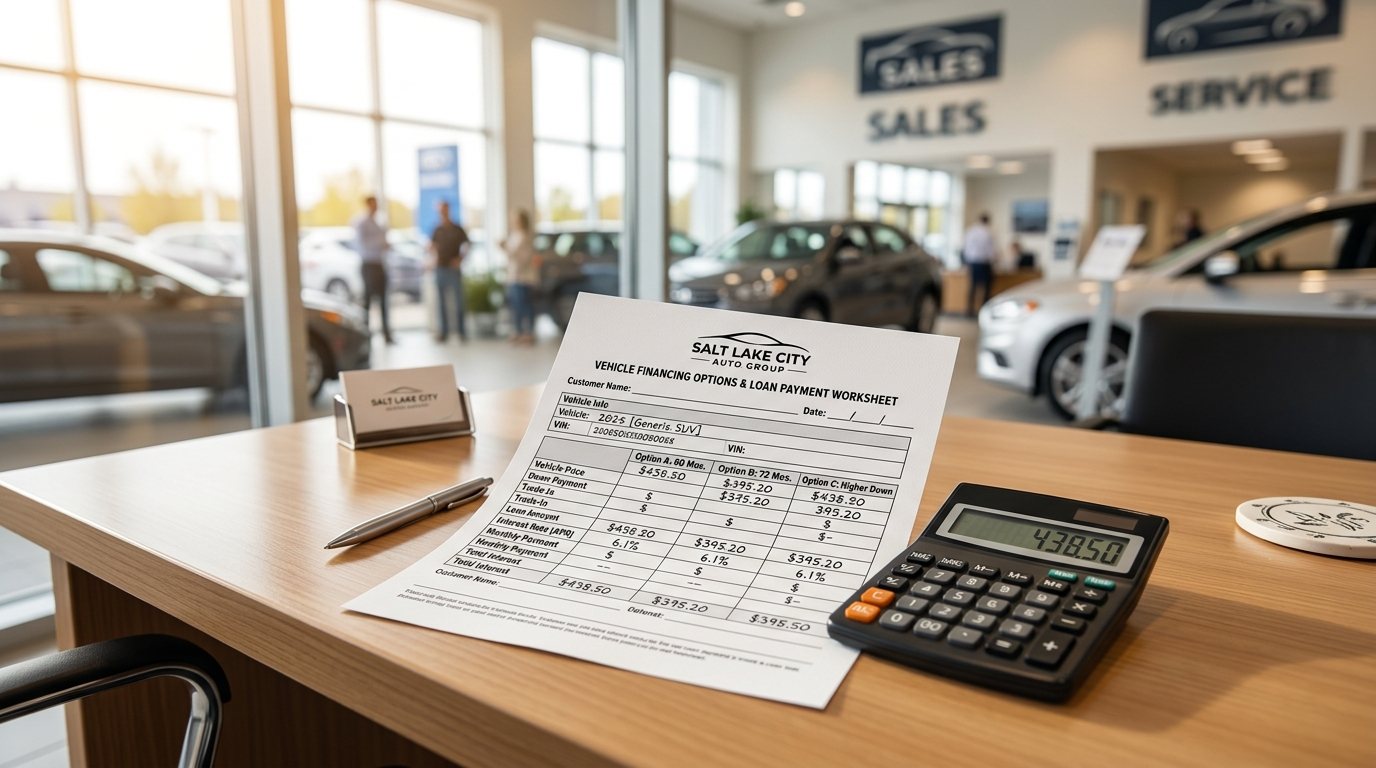
The out-the-door price (often shortened to "OTD") is the total you pay to drive the car off the lot. It includes the price of the vehicle and everything added on top of it: fees, taxes, and any add-ons. If you're paying cash, it's the amount on the check. If you're financing, it's the amount your loan is built from, before your down payment and trade-in come off.
Two dealers can advertise the same car at the same price and still end up thousands of dollars apart once everything is added. Comparing out-the-door prices is the only way to compare offers fairly.
What goes into it
Every out-the-door quote is built from the same pieces. Ask for each one as its own line.
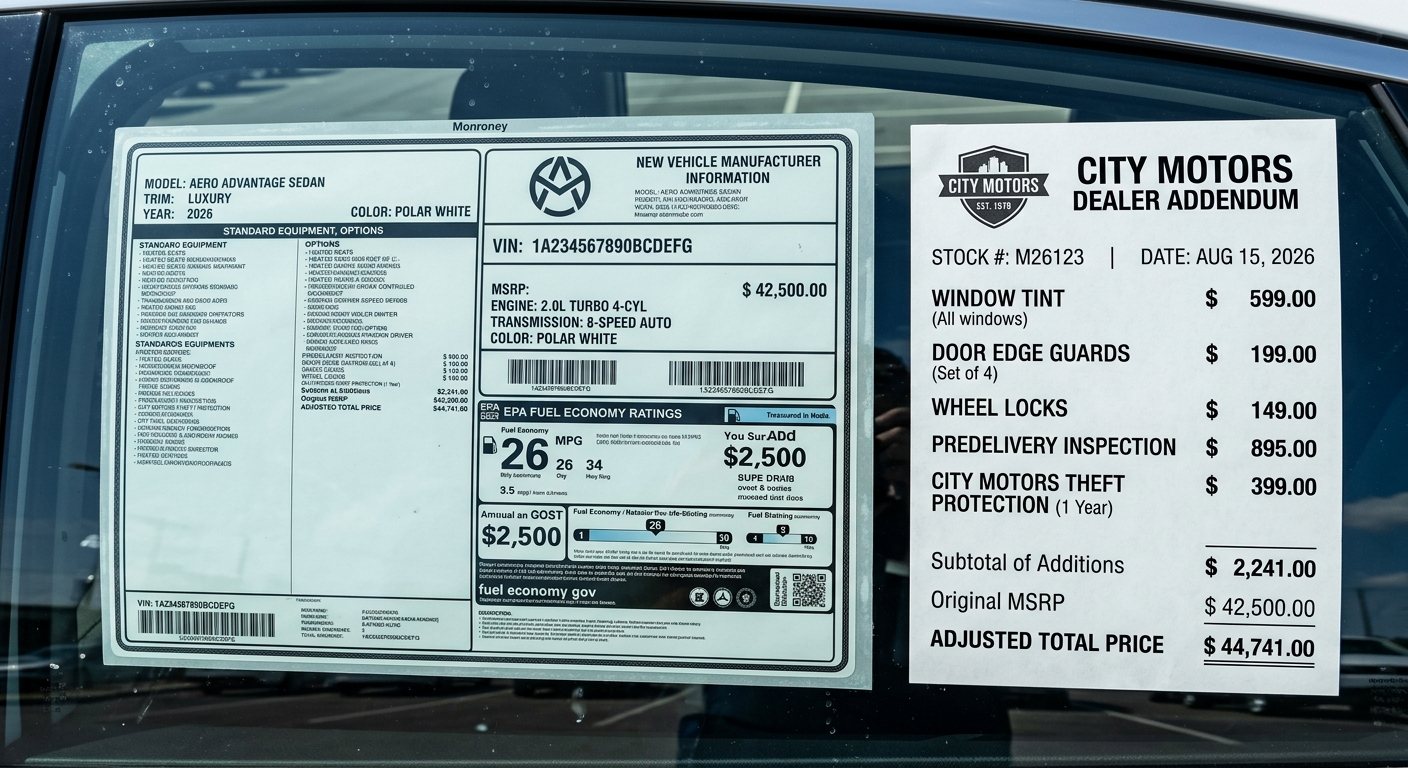
1. The vehicle price. The negotiated selling price of the car. This is where most of your savings come from, and it's the number we push hardest on. Destination charges are usually already in the MSRP on the window sticker, so make sure they aren't added a second time.
2. Dealer add-ons. Anything the dealer has added to the car: paint protection, nitrogen in the tires, VIN etching, window tint, wheel locks, "protection packages." Some are pre-installed and listed on a second sticker next to the factory one. These are where a lot of hidden profit lives, and many of them can be removed or reduced. See our guide to dealer-installed protection packages.
3. The doc fee. What the dealer charges to process your paperwork. Some states cap it; others don't, and it can run close to $1,000. Dealers rarely lower this fee, so the smart move is to negotiate the vehicle price with the fee already in mind. Check your state with our Doc Fee Calculator.
4. Sales tax. Set by your state and local area, not the dealer. In most states, a trade-in lowers the amount you're taxed on, which can save you real money. See how the trade-in tax credit works.
5. Title and registration. Government fees to title the car in your name and get plates. These vary by state and are usually not negotiable, but they should match what your state actually charges.
6. Rebates and incentives. Manufacturer cash comes off the price. Make sure every rebate you qualify for is shown as its own line, so you can see it was applied. Our guide to rebates and incentives explains which ones stack.
Add those up and you have the out-the-door price. Your trade-in value and down payment come off after that.
Related reading: UTV and ATV Freight and Setup Fees: What's Negotiable
How to ask for it in writing
Get the out-the-door price before you ever sit down at a desk. Email or text works best, because it leaves a record and keeps the conversation on numbers.
Here's a simple message that works:
"Hi, I'm interested in the [year, make, model, trim] in [color], stock number [if you have it]. Can you send me an itemized out-the-door price, including the vehicle price, any dealer add-ons, the doc fee, taxes, and title and registration for [your city and state]? I'm comparing a few dealers and plan to decide this week."
A few things make this work:
- Be specific about the car. Year, make, model, trim, and color. A vague request gets a vague answer.
- Ask for it itemized. A single total with no breakdown hides add-ons.
- Give your location. Taxes and registration depend on where you live, not where the dealer is.
- Mention you're comparing. Dealers sharpen their numbers when they know other dealers are in the mix.
Red flags
Some responses tell you a lot about how the rest of the deal will go.
"Come in and we'll work out the numbers." A dealer that won't put a price in writing usually wants you in the showroom, where the conversation can move to monthly payments and add-ons. A good dealer can send a number.
"What monthly payment are you looking for?" A payment can be made to fit almost any budget by stretching the loan. It hides the total. We cover this in the monthly payment trap.
Add-ons that appear late. If the quote you get at the desk has new lines that weren't on the email, ask for them to be removed or for the price to come down to match.
A quote that expires today. "This price is only good if you sign now" is pressure, not a deal.
A total that doesn't match the itemized lines. Add it up yourself. Mistakes happen, and they rarely happen in your favor.
Comparing out-the-door quotes
Once you have two or three written quotes, line them up side by side. Look at the vehicle price first, then the add-ons, then the fees. Taxes and registration should be about the same if the dealers are quoting the same car to the same address.
The lowest out-the-door total wins, as long as the car and its options are identical. If one dealer is lower only because they left something out, the comparison isn't fair. Ask them to send the missing lines.
Then use the best quote with the other dealers. "I have a written out-the-door price of $X on the same car. Can you beat it?" is the single most effective sentence in car buying.
Run your numbers: Out-the-Door Price Calculator
When you finance
If you're financing, settle the out-the-door price first and talk about the loan second. Mixing the two lets a dealer move money between them: a lower price with a higher interest rate, or a "great rate" on an inflated price.
Once you have the out-the-door number, our Payment Calculator shows what the loan will actually cost you, including total interest.
Common questions
Is the out-the-door price negotiable?
Yes. The vehicle price and dealer add-ons are the parts that move. Taxes and government fees don't, and doc fees rarely do. Negotiate the total and let the dealer decide which line to adjust.
Does the out-the-door price include my trade-in?
Usually the quote shows the out-the-door price first, then subtracts your trade-in and down payment. Ask for both numbers so you can see the trade-in value clearly.
Will a dealer give an out-the-door price over the phone or email?
Most will, especially if you're specific about the car and mention you're comparing offers. If one won't, that tells you something about how they do business.
Is destination included in the out-the-door price?
Yes. The destination charge is part of the MSRP on the window sticker, so it's already in the vehicle price. Just make sure it isn't added again as a separate line.
Why is the out-the-door price so much higher than the advertised price?
Advertised prices often leave out fees, add-ons, and taxes, and some include rebates not everyone qualifies for. Our article on advertised price vs. real price explains what the FTC told dealers about this in 2026.
Rather not do this part yourself?
Saving you $1,000 or more is our goal on every deal. We negotiate the purchase, lease, trade-in, and add-ons start to finish. Book a free consultation and we will walk through your situation.