Market Adjustments: When You Can Avoid Paying Over MSRP
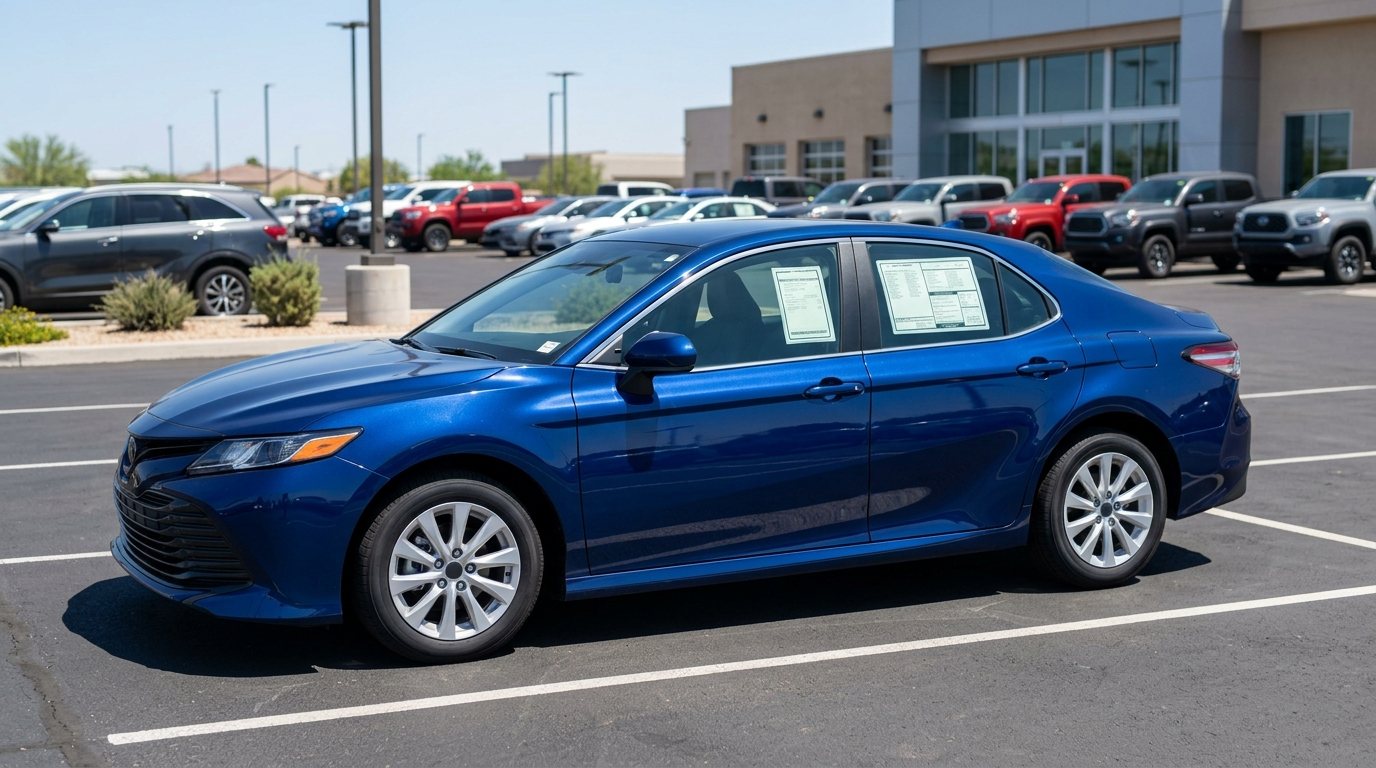
You find the car you want, look at the window, and see two stickers. One is the factory sticker with the MSRP. The other, added by the dealer, says something like "Market Adjustment: $8,000."
That second sticker is a markup, plain and simple. Sometimes it's firm. Often it isn't. And on many cars, the same model is sitting at another dealer at sticker price. Here's how market adjustments work and how to keep from paying one you don't have to.
What a market adjustment is
MSRP stands for Manufacturer's Suggested Retail Price. The key word is "suggested." Dealers are independent businesses, and in most places they can charge more than MSRP if buyers will pay it.
A market adjustment is that extra amount. You'll see it called a lot of things: market adjustment, ADM (additional dealer markup), "market value adjustment," or a "dealer premium." It's usually on a separate sticker or listed as its own line on the quote. It's pure dealer profit. None of it goes to the manufacturer.
Why dealers add them
Markups show up when demand is higher than supply. Common examples:
- New or redesigned models in their first months on sale.
- Performance and enthusiast trims, which are built in smaller numbers.
- Popular trucks and SUVs in certain trims and colors.
- Times when inventory is tight across the whole market.
The same car can carry a big markup at one dealer and none at another, sometimes in the same city. That gap is where buyers save the most money.
Are market adjustments negotiable?
Usually, yes. A market adjustment is a number the dealer chose, not a cost they have to cover. How much it moves depends on how hard the car is to find.
On most vehicles, even popular ones, the markup shrinks or disappears once the dealer knows you have other options. On a small number of truly limited cars, the kind dealers only sell to their best customers, markups can be firm. Those are the exception, not the rule.
How buyers avoid paying over MSRP
1. Shop wider than your local dealers. This is the biggest one. A car marked up $10,000 near you may be at sticker price a few hours away, or a few states away. Dealers in smaller markets often price closer to MSRP. Even with travel or shipping, the math often works heavily in your favor.
2. Get out-the-door prices in writing. Ask each dealer for an itemized out-the-door price. A written quote at MSRP from one dealer is the strongest tool you have with another.
3. Ask about a factory order. If the dealer can order the car from the factory for you, many will do it at or near MSRP, since they aren't paying to keep it on the lot. It takes longer, but you get exactly the options you want.
4. Be flexible where you can. A different color, or a trim one step up or down, can be the difference between a markup and no markup. Decide in advance what you won't compromise on.
5. Ask directly. "Will you sell this car at MSRP?" is a fair question. If the answer is no, ask what the best out-the-door price is and keep shopping. Don't let a markup get folded quietly into a monthly payment. See the monthly payment trap.
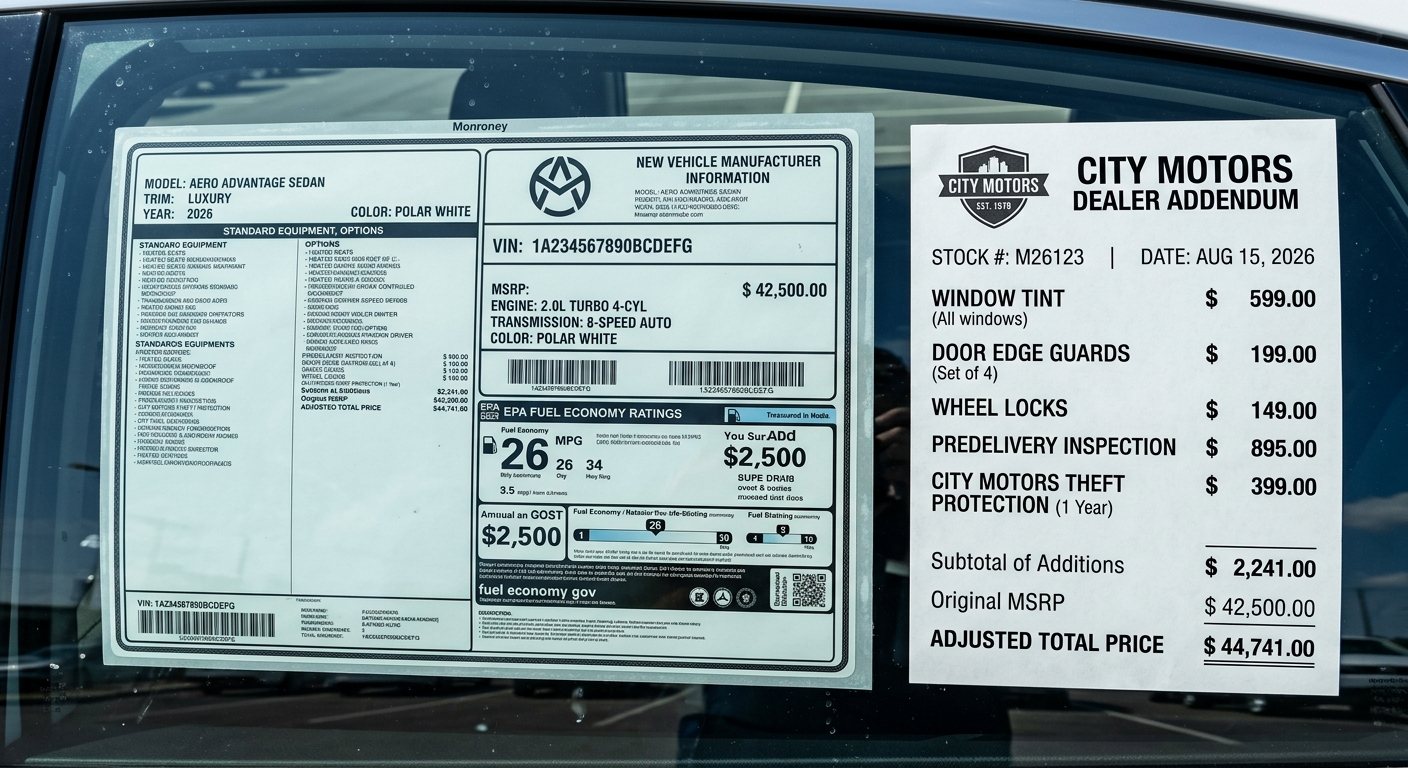
6. Watch for markups in disguise. Some dealers drop the "market adjustment" sticker but add the same money back as a mandatory "protection package" or pre-installed add-ons. Read every line. Our guide to dealer-installed protection packages shows what to look for.
7. Be willing to wait. Markups often fade a few months after a launch, or when inventory catches up. If you aren't in a hurry, time is on your side.
Related reading: Buying a Car Out of State: Taxes, Registration, and Shipping
Paying MSRP can be a real win
It's easy to think a deal only counts if it's below sticker. On an in-demand car, getting it at MSRP when local dealers are asking thousands over is a real savings. If one dealer wants $8,000 over sticker and another sells you the same car at sticker, you kept $8,000.
That's why the right comparison isn't always MSRP. It's what the market is actually charging for that car.
What to say to a dealer
A simple, polite message gets better results than a fight:
"I'm interested in the [year, make, model, trim] in [color]. I'm shopping several dealers and I'm not paying a market adjustment. Can you send me your best itemized out-the-door price at or near MSRP?"
Then compare the written answers. The dealers who want to sell a car will respond with real numbers.
Common questions
Is it legal for dealers to charge over MSRP?
In most places, yes. MSRP is a suggested price, and dealers set their own selling prices. They do have to disclose the price clearly.
Can you negotiate a market adjustment?
Usually. It's a markup the dealer chose, so it often shrinks or goes away when you have written offers from other dealers. Truly limited cars are the exception.
What does ADM mean on a car sticker?
ADM stands for additional dealer markup. It means the same thing as a market adjustment: an amount added on top of MSRP by the dealer.
Is it worth buying from a dealer in another state to avoid a markup?
It often is, when the markup is large. Taxes and registration are based on where you live, and many dealers can ship. Compare the full out-the-door cost, including travel or shipping.
Are market adjustments going away?
They rise and fall with supply. They're less common on most cars than a few years ago, but still show up on new, popular, and limited models.
Rather not do this part yourself?
Saving you $1,000 or more is our goal on every deal. We negotiate the purchase, lease, trade-in, and add-ons start to finish. Book a free consultation and we will walk through your situation.