Car Rebates and Incentives Explained: What Actually Stacks

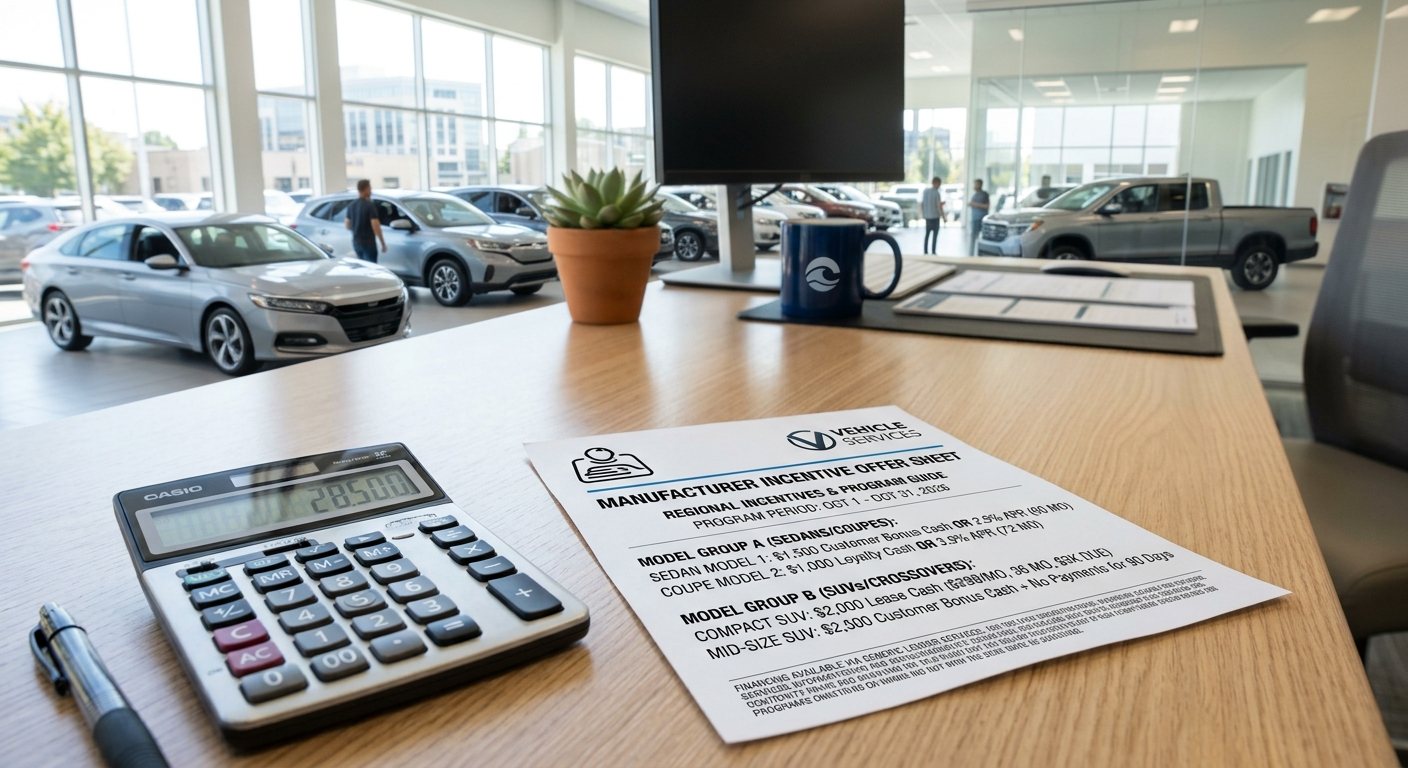
Before a single word of negotiating happens, there is often real money already sitting on a vehicle, put there by the manufacturer, not the dealer.
It is called an incentive, and it comes in more forms than most buyers realize. The problem is that a dealer can present that manufacturer money as though it were their own generous discount, when in reality they have not given up anything yet.
Here is what the different incentive types actually are, which ones combine with each other, and which ones quietly cancel each other out.
Where this money actually comes from
Manufacturers regularly fund incentive programs to move specific models, trims, or model years. This spending is real and substantial: recent industry data has put manufacturer incentive spending at over 6% of MSRP nationally, averaging well over $3,000 per vehicle on a typical transaction price above $45,000. That money exists on the car before a dealer discounts anything. A first offer that does not already reflect it has not actually given you a discount at all. It has just handed back what the manufacturer already put there.
Purchase cash (customer rebates)
Purchase cash, sometimes called a purchase allowance, is a rebate paid directly toward your purchase. It is the incentive most buyers have actually heard of, since it is often advertised directly ("$3,500 cash back"). The catch: purchase cash is frequently bundled together with a special low-APR financing offer, and the two are usually either/or, not both. Taking the cash often means giving up the promotional rate, and the cash portion is often contingent on financing through the manufacturer's own captive lender rather than an outside bank or a cash purchase. Whether the cash or the low rate saves you more depends on your loan amount, term, and credit tier. It is worth running the actual math on both before assuming the advertised cash number is the better deal.
Dealer cash (the incentive you never see)
Dealer cash is a manufacturer incentive paid directly to the dealer, not automatically passed on to you. Unlike purchase cash, there is no obligation for the dealer to mention it, let alone apply it to your price. It is separate from a customer-facing rebate, and it is one of the more common ways a dealer can appear to be negotiating hard while actually just not passing along money that was already there. Asking directly whether dealer cash applies to your specific vehicle, and getting the answer in writing, is the only reliable way to find out.
Conquest incentives
A conquest incentive is a rebate offered specifically to a buyer switching from a competing brand. Manufacturers use these to win customers away from rivals, and eligibility is usually based on the vehicle currently in your driveway. If you are trading in or currently own a competing brand, this is worth flagging at the very start of your search, since it is not always volunteered.
Loyalty incentives
The mirror image of a conquest incentive: a loyalty rebate goes to a buyer already in the same brand's family, rewarding you for coming back. If you currently own or lease the brand you are shopping for, ask specifically whether a loyalty incentive applies.
Conquest and loyalty incentives are mutually exclusive by definition, since you are either switching brands or staying with one, but each typically stacks on top of the dealer's own discount, since they come from the manufacturer's side of the deal, not the dealer's.
Special group incentives
Beyond brand-switching and loyalty, manufacturers frequently run additional incentive programs for specific groups: active military and veterans, recent college graduates (usually within the last one to two years), and in some cases first responders or healthcare workers. These are easy to miss because they are rarely advertised loudly, and eligibility rules (proof required, program dates, which trims qualify) vary by manufacturer. If you fall into any of these categories, it is worth asking about explicitly rather than waiting for a dealer to bring it up.
The stacking rules nobody explains
This is where most of the confusion happens, because "incentive" gets used as if it is one single thing, when it is really several different pools of money with their own rules:
- Purchase cash and a promotional low APR are usually either/or, not stackable.
- Conquest and loyalty incentives are mutually exclusive with each other, since you qualify for one or the other, never both on the same deal, but each can stack with the dealer's own price discount.
- Dealer cash sits separately from any customer-facing rebate and is not something you "choose" between. It is either applied to your price or it is not.
- Special group incentives (military, recent grad, first responder) often stack with other customer incentives, but not always with each other, and rules vary by manufacturer.
There is no universal formula here. The only reliable approach is asking for every applicable incentive itemized separately, in writing, rather than accepting a single bottom-line number and trusting that it reflects everything you actually qualify for.
The trap: a dealer presenting factory money as their own discount
The most common way this backfires on buyers: a dealer quotes a price that looks like a real concession, when it is actually just the manufacturer's own incentive money showing up as if the dealer gave it to you. If a first offer does not clear the incentives you already know you qualify for, the dealer has not discounted anything yet. They have just handed back what was already sitting on the car.
How to get the real breakdown
Ask for two numbers, separately, in writing: the manufacturer incentives you qualify for, and the dealer's own price discount on top of that. A dealer unwilling to separate the two is a sign the "discount" you are being shown is mostly, or entirely, incentive money that was never theirs to take credit for.
How DriveTrust handles this
Before we ever call a dealer on a client's behalf, we identify which incentives actually apply, based on the vehicle currently in the client's driveway, their military or veteran status, and any other qualifying detail from the intake conversation. Every dealer we contact gets asked for factory incentives and dealer discount as two separate numbers, so a client never ends up "saving" money that was already theirs to begin with.
Common questions
What is the difference between a rebate and an incentive?
"Incentive" is the broader term for any manufacturer-funded discount program. "Rebate" usually refers specifically to cash paid toward the customer's purchase, which is one type of incentive among several.
Can I combine a loyalty incentive with a conquest incentive?
No. They are mutually exclusive by definition, since one requires owning a competing brand and the other requires already owning the brand you are buying.
Does dealer cash ever get passed on to the customer?
Sometimes, but only if you ask. Unlike a customer rebate, there is no requirement for a dealer to apply dealer cash to your price.
Should I take the cash rebate or the low APR rate?
It depends on your loan amount, term, and credit tier. Run the real numbers on both scenarios before assuming the advertised cash amount is the better deal.
How do I know if I qualify for a military or loyalty incentive?
Ask directly, and be ready with proof (current registration for loyalty/conquest, service documentation for military). These programs are not always mentioned unless you bring them up first.
Rather not do this part yourself?
We identify which factory incentives you actually qualify for, then ask every dealer for factory money and dealer discount as two separate numbers. Book a free consultation and we will walk through your situation.