Why "What Payment Are You Looking For?" Is the Wrong Question to Answer
It usually comes early, and it sounds like customer service. What monthly payment are you comfortable with?
Answer it, and you have handed over the one number that lets the entire rest of the deal be built around you rather than with you.
The mechanic
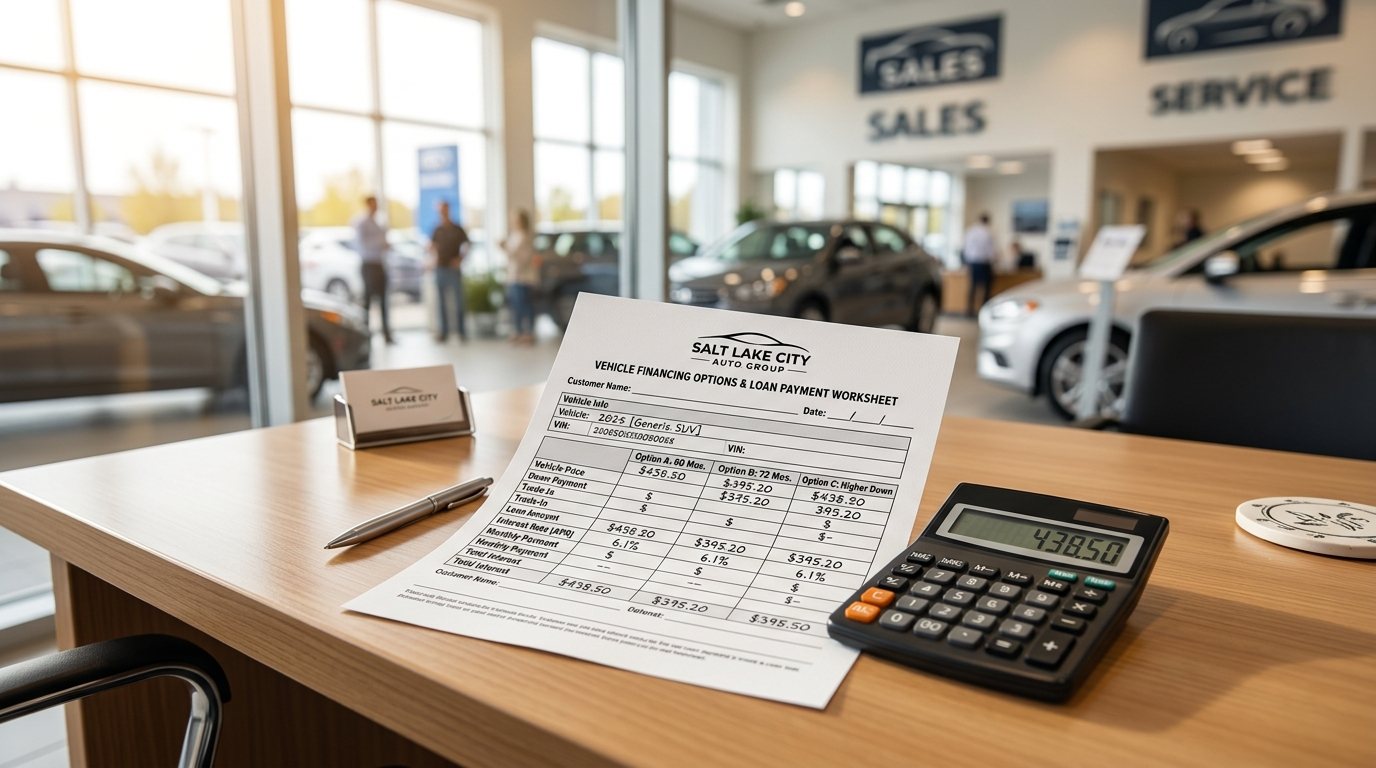
A monthly payment is not a price. It is the output of four separate variables:
- The vehicle price
- The loan term, meaning how many months
- The interest rate
- The down payment or trade equity applied
Change any one of those and the payment moves. Which means almost any payment target can be hit without the price coming down at all.
Say you want $600 a month. Stretch the loan from 60 months to 72, and the payment drops without a dollar coming off the vehicle. Stretch to 84 and it drops further. You got your number. You are paying more.
This is not a fringe tactic. It is the standard structure of a payment led negotiation, and it works because the payment is the number most buyers actually feel month to month.
What the extra term actually costs
Two things happen when a loan term stretches.
You pay more interest. More months of interest on the same balance. The longer the term, the more total interest, and the difference across a 60 versus 84 month loan on the same vehicle is substantial.
You stay underwater longer. Vehicles depreciate fastest early. Loans pay down principal slowest early. On a long term loan, you can owe more than the vehicle is worth for years. That matters if the car gets totaled, and it matters if you want to trade before the loan is done, because the shortfall follows you into the next deal as negative equity.
Long loan terms are also the exact condition that makes GAP insurance genuinely necessary. A payment structure that stretches the term creates a real need for a product the finance office is about to sell you.
What to negotiate instead
The number that matters is the out-the-door price. Everything, in writing: vehicle price, taxes, doc fee, title, registration, every fee.
The out-the-door price is the only figure you can compare cleanly across dealers, because it is the only one that cannot be reshaped by adjusting a term or a rate. Two quotes on the same vehicle can show identical monthly payments and differ by thousands in total cost. The same two quotes stated as out-the-door prices are directly comparable.
Negotiate the price and the term together, never a payment on its own. Confirm both.
What to say when the question comes
You do not need a clever script. A direct answer works:
"I would rather work from the out-the-door price. Once we agree on that, we can look at what the payment comes out to."
That is not confrontational and it is not unusual. It reorders the conversation so the price gets settled before the financing structure gets built on top of it.
If the answer is that they cannot quote an out-the-door price, or need you to come in first, or need a payment target before producing numbers, that itself is information. A dealer who cannot produce a written out-the-door figure for a specific vehicle is one you can compare against a dealer who will.
Financing is its own negotiation
One more layer worth knowing.
When a dealer arranges financing, the lender quotes the dealership a rate, called the buy rate. The rate presented to you, called the sell rate, is often higher. The difference is dealer profit on the financing itself, entirely separate from the vehicle price.
Which is why arriving with your own pre approval from a bank or credit union is useful even if you end up not using it. It gives you a rate to compare against, and it makes the dealer's financing compete rather than simply be presented.
If the dealer beats your pre approved rate, that is a real win and worth taking. But you only know it is better because you brought a number to compare it to.
Worth noting: some manufacturer incentives, particularly low APR promotional rates and certain cash allowances, require financing through the manufacturer's own lender. These are frequently either or rather than stackable, and which one is better depends on the loan amount, term, and your credit tier. That math is worth running rather than assuming the advertised rate is automatically the better deal.
The short version
- A payment is an output, not a price
- Any payment can be hit by stretching the term
- A longer term means more interest paid and more time underwater
- Negotiate the out-the-door price, in writing
- Confirm price and term together, never payment alone
- Bring your own financing pre approval as a benchmark
How DriveTrust handles this
Our entire process is built on written out-the-door pricing, from multiple dealers, on the same vehicle.
We do not take verbal quotes and we do not work from payments. We collect written worksheets with every number on paper, which makes offers directly comparable and makes the spread between dealers visible. That spread is usually larger than buyers expect, and it is invisible to anyone talking to one store about a monthly payment.
The client never has to be the person holding that line in a showroom.
Common questions
Is it always bad to have a long loan term?
Not automatically, but it carries real costs: more total interest and a longer period owing more than the vehicle is worth. If you choose a longer term, choose it knowingly rather than as a side effect of hitting a payment target.
What is a good loan term?
Shorter is generally better for total cost. Many buyers find 48 to 60 months a reasonable balance. The right answer depends on your budget, but it should be a decision you make rather than a lever someone else pulls.
Should I tell the dealer my budget at all?
Sharing a total budget or a target out-the-door price is useful. Sharing a monthly payment target is what lets the deal be built around the term instead of the price.
What does out-the-door price include?
The vehicle price plus every cost to complete the purchase: sales tax, title, registration, doc fee, and any other dealer or state fees. It is what you would actually pay in total.
Should I get pre approved before going to a dealership?
It is worth doing. It gives you a rate benchmark, and the dealer's financing then has to compete rather than simply be presented as the option.
Rather not do this part yourself?
We work from written out-the-door pricing across multiple dealers, never from payments. Book a free consultation and we will walk through your situation.