How a Higher Trade-In Offer Can Cost You Money
You asked for more on your trade. They came back with more on your trade. It feels like you won.
Check the total. There is a reasonable chance it did not move.
Two numbers, one total
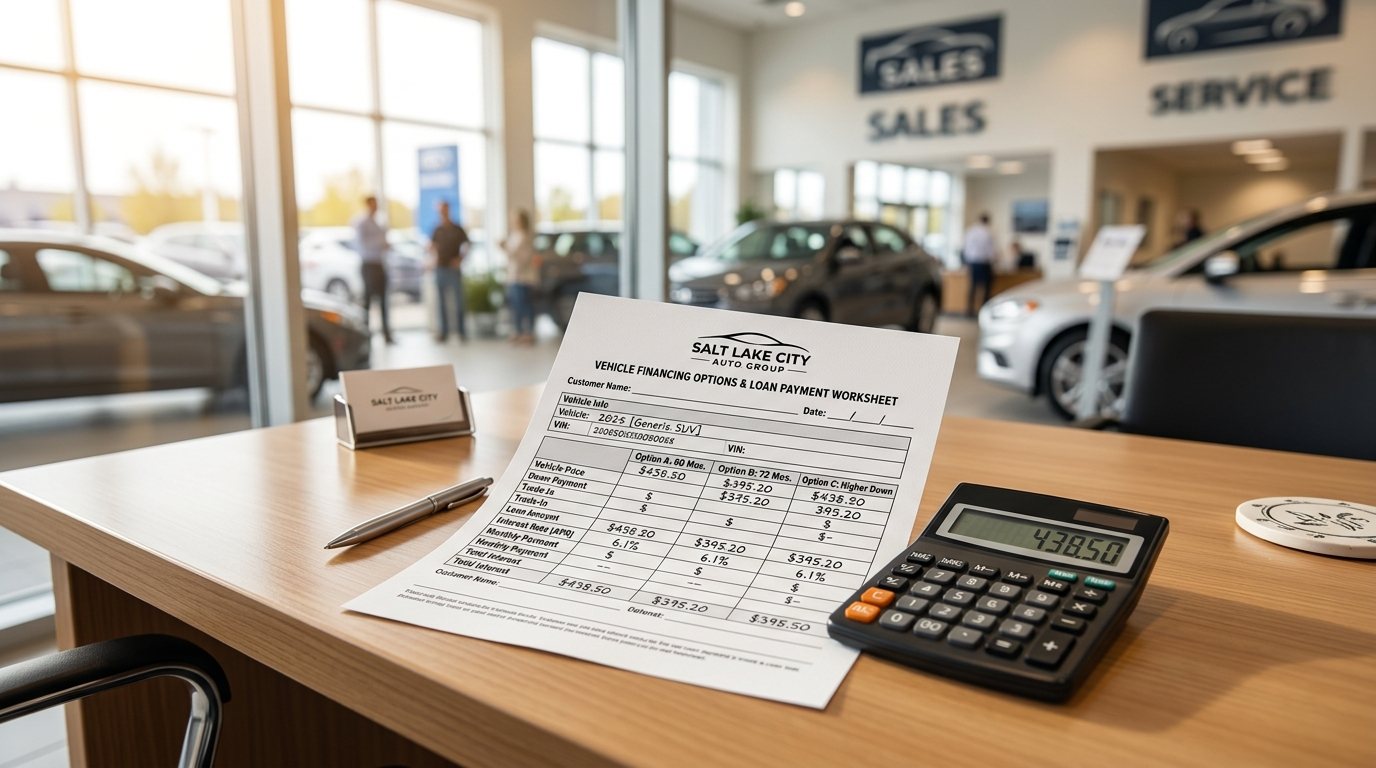
A deal with a trade has two independent figures: what you pay for the new vehicle, and what you receive for the old one. Only the difference between them affects your wallet.
Which means an extra $2,000 on your trade, paired with $2,000 quietly added back onto the vehicle price, leaves you exactly where you started. You feel like you gained ground because the number you were watching went up. The number you were not watching went up too.
This works because most buyers negotiate one number at a time and never re verify the total after each adjustment. The fix is straightforward once you know to look for it.
Negotiate them separately
Settle the vehicle price first, completely, in writing, before your trade enters the conversation at all.
Once that number is locked and documented, introduce the trade as a separate negotiation. Then confirm the out-the-door total again after the trade is applied.
If the vehicle price moved when the trade came into the picture, you now know, because you have the earlier written number to compare against. Without that written figure, there is nothing to compare and the shift is invisible.
Some buyers avoid mentioning a trade until the vehicle price is settled. That is reasonable and common practice. It is not deception. It simply keeps two separate negotiations from being blended into one number that is harder to evaluate.
Get real outside offers first
Your trade has a market value independent of any dealership's opinion of it.
Before you negotiate, get actual cash offers from third parties. CarMax and Carvana both provide written offers with a validity window. Online valuation tools like Kelley Blue Book give you an estimate range, which is useful context, though a real cash offer in hand carries more weight than an estimate.
Now you have something concrete. Not a feeling that the dealer's number seems low, but a competing written number.
If the dealer's offer beats the outside cash offers, take it. If it does not, you have a real alternative: sell the vehicle to the outside buyer and treat the new purchase as a straight cash deal. Those are genuinely both fine outcomes, and having both available is exactly what gives you leverage on the trade number.
The tax argument, and when it is actually right
There is a real advantage to trading in rather than selling separately, and dealers will raise it. It is worth understanding properly because it is legitimate, and because it gets used to justify a gap larger than it covers.
In most states, when you trade a vehicle in, you pay sales tax only on the difference between the new vehicle price and the trade allowance, not on the full price. Sell your car privately instead, and you pay tax on the entire purchase.
That tax savings is real money. On a meaningful trade value and a typical tax rate, it can amount to several hundred to over a thousand dollars.
So the honest comparison is not the dealer's trade offer against the outside cash offer. It is the dealer's offer plus the tax savings against the outside cash offer.
Two things to keep straight:
Do the math rather than accepting the framing. The tax offset makes the trade better by a specific, calculable amount. If the outside cash offer exceeds the dealer's offer by more than that amount, selling separately still wins. "We are actually better because of the tax" is sometimes true and sometimes not, and the only way to know is to run the numbers for your state and your figures.
Confirm the rule in your state. Not every state applies the trade in tax credit, and a few cap it. Check rather than assume.
Before the appraisal
A few practical things that affect the number:
Know your payoff. If you still owe on the vehicle, get the exact ten day payoff quote from your lender first. If you owe more than the trade is worth, that shortfall is negative equity, and rolling it into a new loan starts the next vehicle underwater from day one. That is worth knowing before you are at a desk, not during.
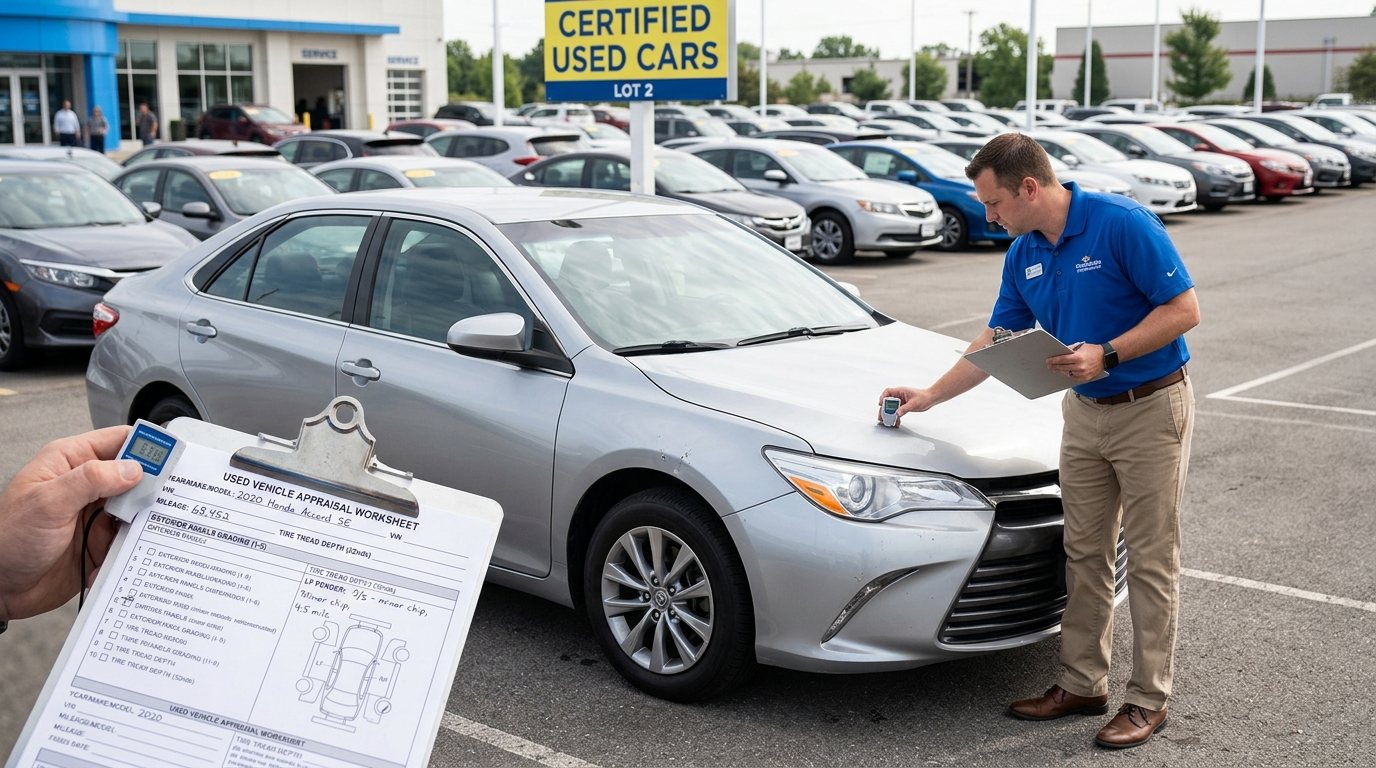
Clean the car. It sounds trivial. Appraisals are partly subjective and a clean, presentable vehicle appraises better than the same vehicle dirty.
Gather documentation. Service records, both keys, the owner's manual. Missing keys in particular come off the number, since replacements are genuinely expensive.
Fix nothing major. Do not put money into repairs hoping to recover it in trade value. You generally will not.
A note on your keys
During a trade appraisal, some dealerships take your keys and are slow to return them, sometimes requiring a manager's sign off. It creates a subtle pressure to stay, and it is a documented enough pattern to be worth expecting.
It is easily defused. Bring a spare key. If you decide to leave, you can simply leave.
How DriveTrust handles this
We treat the vehicle price and the trade value as two entirely separate negotiations, confirmed independently, and we re verify the out-the-door total after any trade adjustment.
We also bring real outside cash offers into the conversation rather than accepting a dealer's appraisal as the only available number. A trade offer negotiated against a documented competing offer tends to land in a different place than one negotiated against nothing.
The client does not have to run two negotiations at once, watch for the offset, or spend a Saturday finding out what their car is actually worth.
Common questions
Should I tell the dealer I have a trade upfront?
Many buyers settle the vehicle price first and introduce the trade afterward, which keeps the two numbers from being blended. Either approach can work, but the important part is confirming the out-the-door total again after the trade is applied.
Is trading in better than selling privately?
It depends on the gap between the offers and your state's trade in tax credit. Trading is simpler and carries the tax advantage. Selling privately usually brings a higher gross number. Run the actual math for your situation.
How do I know what my trade is worth?
Get real written cash offers from CarMax, Carvana, or similar, and use a valuation tool for a reference range. A written offer is stronger than an estimate.
What if I owe more than my car is worth?
That is negative equity. It can be rolled into the new loan, but doing so starts your next vehicle underwater and increases what you finance. Know the exact figure from your lender before negotiating.
Does a trade in reduce my sales tax?
In most states, yes. You pay tax on the difference between the new vehicle price and the trade allowance rather than the full price. Confirm the rule for your state, since not all apply it.
Rather not do this part yourself?
We run the vehicle price and the trade as two separate negotiations and re verify the total after every adjustment. Book a free consultation and we will walk through your situation.