The Four-Square Worksheet: How the Dealership's Favorite Tool Actually Works

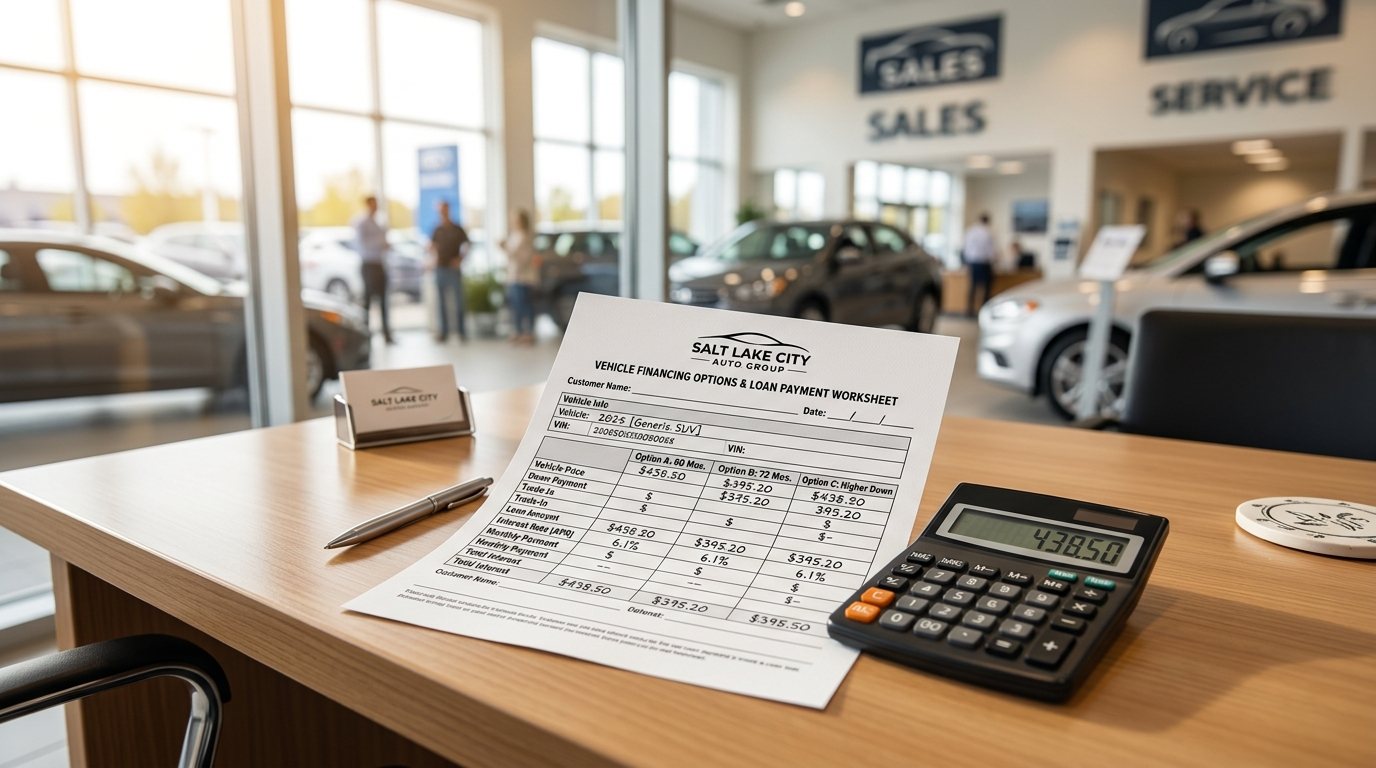
If you have bought a car at a dealership, you have probably seen a page divided into four boxes. Vehicle price in one. Trade-in value in another. Down payment in a third. Monthly payment in the fourth.
It looks like an organizational tool. It functions as a negotiation structure, and understanding how it works changes what happens next.
What the four boxes do
Each box holds one number, and all four are connected. Move one and the others can move to compensate.
That is the entire mechanism. You ask for more on your trade, the trade box goes up, and the price box quietly goes up with it. You ask for a lower monthly payment, the payment box drops, and the loan term extends somewhere off the page to make it happen. Every request you make can be granted in the box you are looking at and taken back in a box you are not.
None of this requires anyone to lie to you. The numbers on the page are real. They are just being moved around rather than reduced.
Why it gets walked through slowly
There is a rhythm to how the worksheet gets presented. One box at a time. Long pauses. A trip to the manager's office between rounds. Then a return with a slightly different number.
Buyers consistently report this taking hours. That duration is not an accident of a busy showroom. Decision fatigue is real and well documented, and a person four hours into a negotiation makes different choices than the same person at the start. The pace is part of the structure.
The trip to the manager serves a second purpose beyond delay: it removes the person you are talking to from the decision. You cannot negotiate with someone who says they lack authority, so each round resets rather than builds.
The one number that cannot be shuffled
The out-the-door price is the total you pay to drive away. Vehicle price, sales tax, title, registration, doc fee, everything.
It is the only figure in the entire transaction that cannot be adjusted by moving money between boxes, because it is the sum of all the boxes. A four-square can show you four different arrangements that all produce the same out-the-door price. Ask for that number instead and there is nothing left to rearrange.
This is why the request matters more than the negotiation skill. You are not trying to out-argue anyone. You are asking for the figure that makes the shuffling visible.
What to ask for, before anything else
Ask for the full out-the-door price in writing before any back and forth begins. Not a monthly payment. Not a price with fees to be determined later. The complete number, itemized, on paper or in an email.
That request does three things at once. It gives you something you can compare against another dealer's number. It removes the box-by-box format entirely. And it moves the conversation to a written record rather than a series of verbal rounds you have to keep track of from memory.
Decline to negotiate box by box. If the worksheet comes out, it is entirely reasonable to say you would rather work from the out-the-door total. This is a normal request, not a confrontational one.
Treat a refusal as information. If a dealer will not produce a written out-the-door figure for a specific vehicle, that tells you something useful. Plenty of dealers will. The one that will not is not the only option available to you.
Negotiate the trade separately
Because the four-square deliberately links your trade to your purchase price, the cleanest response is to unlink them.
Settle the vehicle price first, in writing. Then introduce the trade as a separate conversation. Then confirm the out-the-door total again after the trade is applied, and compare it against the written number from before.
If the vehicle price moved when the trade entered the picture, you will see it, because you have the earlier figure. Without that written number, there is nothing to compare against.
The parts that happen off the worksheet
Two things commonly shape the final cost without appearing on the four-square at all.
The loan term. A lower monthly payment in the fourth box can come from a longer loan rather than a lower price. Always confirm the term alongside the payment, never the payment alone.
The finance office. After the worksheet is settled and signed off on, there is a second conversation about extended warranties, GAP insurance, protection packages, and other add-ons. Those decisions are best made in advance rather than at the end of a long day.
How DriveTrust handles this
Our process starts where the four-square ends. We request written out-the-door pricing from multiple dealers on the same vehicle, then compare those documented numbers against each other.
That does two things a worksheet cannot. It makes the real spread between dealers visible, which is usually wider than buyers expect. And it means no client ever sits through the box-by-box format, because the negotiation happens before anyone walks into a showroom.
The client sees the finished numbers, picks the one they want, and signs.
Common questions
What is a four-square worksheet?
A form dividing a vehicle negotiation into four boxes: vehicle price, trade-in value, down payment, and monthly payment. Because the four numbers are linked, adjusting one allows the others to be adjusted in compensation.
Can I refuse to use the four-square?
Yes. You can ask to work from the out-the-door price instead. It is a common and reasonable request.
Why do dealers keep leaving to talk to a manager?
It can be a genuine approval step, and it also functions as pacing. Either way, it slows the process and removes decision-making authority from the conversation in front of you.
What should I ask for instead of a monthly payment?
The out-the-door price in writing, itemized, including tax, title, registration, and all fees. It is the only figure that is directly comparable between dealers.
Should I tell them my trade-in upfront?
Many buyers settle the vehicle price first and introduce the trade afterward, which keeps the two from being blended. What matters most is confirming the out-the-door total again after the trade is applied.
How long should buying a car take?
Much of the reported four to six hour experience is process, not paperwork. When pricing and add-ons are settled in writing beforehand, the dealership visit is generally limited to signing and delivery.
Rather not do this part yourself?
We work from written out-the-door pricing across multiple dealers, so there is no worksheet to sit through. Book a free consultation and we will walk through your situation.