Dealer Financing or Your Own Bank? How to Decide Before You Walk In
Most buyers treat this as a binary. Either you finance through the dealership because it is convenient, or you go to your own bank because you have heard dealer financing is a trap.
Both framings miss what is actually happening. Dealer financing is not a lender. It is a brokerage, and understanding that one fact tells you how to use it.
What "dealer financing" actually means
The dealership is almost never lending you money. It submits your credit application to a network of lenders: banks, credit unions, and the manufacturer's own captive finance arm. Those lenders send back approvals.
The dealership then presents you with one of them.
This is genuinely useful. A finance office can shop a dozen lenders in minutes, and for a buyer with imperfect credit it may find approvals a single bank would not offer. That is real value.
The part worth understanding is what happens between the approval and the number you are quoted.
Buy rate and sell rate
When a lender approves your application, it quotes the dealership a rate. That is the buy rate. It is what the lender needs to fund your loan.
The dealership may then present you a higher rate. That is the sell rate. The difference is dealer profit on the financing, entirely separate from the vehicle price, and it is paid by you over the life of the loan.
This practice is legal and disclosed in the sense that your contract shows your actual rate. What is not disclosed is the gap. Nobody volunteers the buy rate.
On a recorded industry call, a finance manager acknowledged marking a customer up 1.5 percentage points and said he could have taken 2.5. On a typical loan amount over a typical term, a point and a half is a meaningful number.
The counter is simple and it is a question: "What is the buy rate on this approval?"
Using the term itself matters. It signals you know how the structure works, which changes the conversation even in cases where you do not get a straight number.
Why a pre-approval helps even if you do not use it
This is the part most advice gets half right.
Getting pre-approved by your own bank or credit union before shopping is worth doing, and the reason is not that credit unions always win. Sometimes they do not. The reason is that a pre-approval gives you a number to compare against.
Without one, the finance office presents a rate and you have no basis to evaluate it. With one, the dealer's financing has to compete rather than simply be offered.
If the dealer beats your pre-approved rate, take it. That is a genuine win and it happens regularly, especially when the manufacturer is subsidizing rates. But you only know it is better because you brought something to measure it against.
Credit unions are worth a call specifically because they are member-owned nonprofits, which often translates into lower auto loan rates than commercial banks. That is a structural tendency, not a guarantee, and it is worth checking rather than assuming in either direction.
The captive lender and why it complicates things
The manufacturer's own finance arm, Toyota Financial, Honda Financial and their counterparts, is a special case.
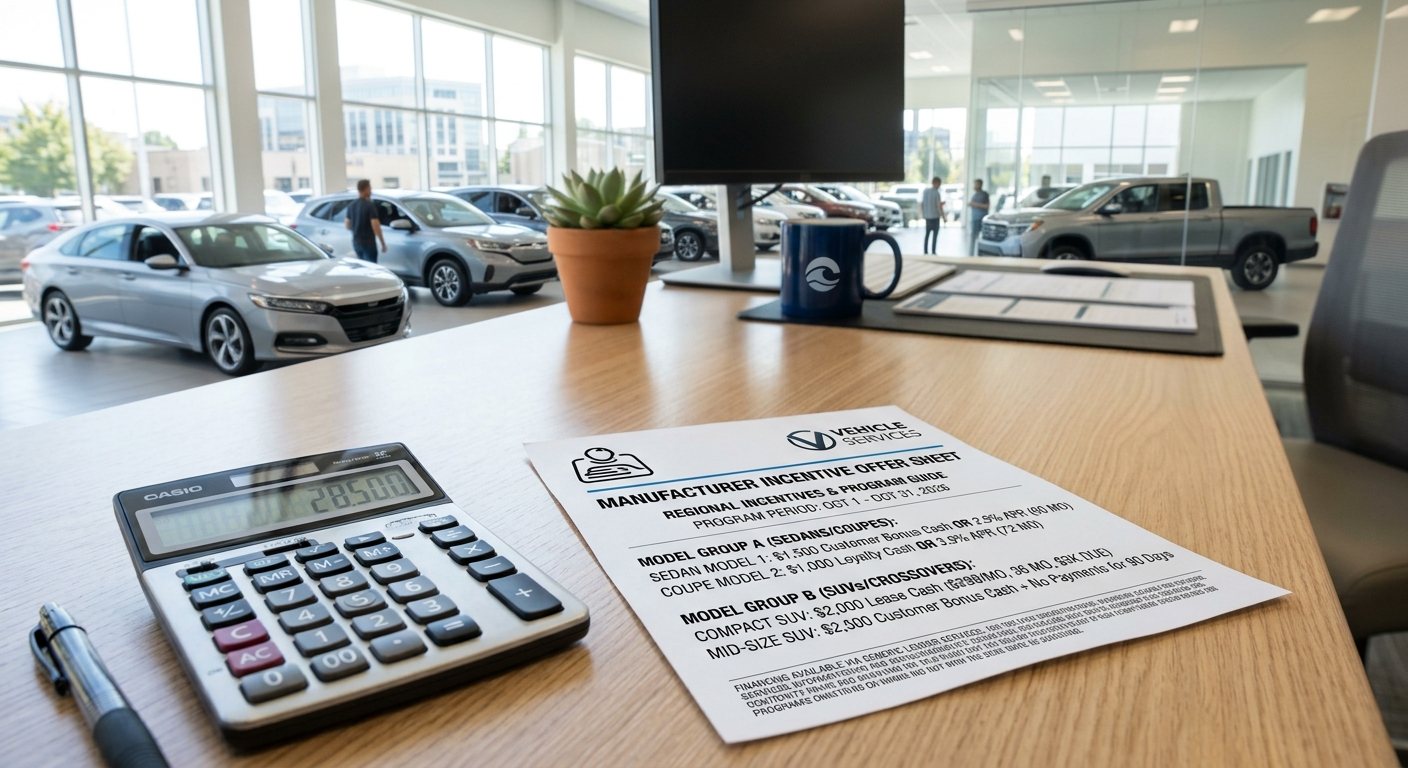
Manufacturers use their captive lenders to run promotional financing. When you see 0.9% or 2.9% APR advertised on a specific model, that rate is almost always available only through the captive, because the manufacturer is subsidizing it to move that vehicle.
Which means two things:
A promotional rate can genuinely beat any outside lender. Nobody at a credit union can match a subsidized rate, because it is not being priced on risk, it is being priced as a sales incentive.
Promotional rates and cash incentives are frequently either/or. You often cannot take both the 1.9% APR and the $3,500 purchase cash. You choose. Which one is better depends on the loan amount, the term, and your credit tier, and running that math is worth the ten minutes.
There is also a qualification layer. Promotional rates typically require top-tier credit, and the advertised rate is the best-case tier, not the rate everyone gets.
Watch for financing being tied to the price
One practice worth knowing about specifically: some dealers offer a lower vehicle price conditioned on you using their financing.
The FTC has identified conditioning an advertised price on the use of dealer financing as a potentially deceptive practice, and it was one of the items named in the warning letters sent to 97 dealership groups in March 2026.
If a discount evaporates when you say you have your own financing, that is worth naming out loud and getting in writing. The price of the car and the source of the money are two separate transactions.
The refinance option
Worth knowing as a fallback rather than a plan.
If the promotional financing requires the captive lender and you want the cash incentive instead, or if you accept a dealer rate you are unsure about, you can generally refinance the loan later through your own bank or credit union.
Two caveats. Refinancing costs time and another credit inquiry, and if you took a subsidized promotional rate, refinancing away from it almost never makes sense. Treat this as a repair mechanism, not a strategy.
What to actually do
Get pre-approved before you shop. One or two lenders, ideally including a credit union. Know your rate and your term.
Check what the manufacturer is offering on the specific model, and check whether the promotional APR and any cash incentive are stackable or either/or.
Ask for the buy rate by name when the dealer presents financing.
Keep the price conversation separate from the financing conversation. Settle the out-the-door price first. Then discuss how it gets paid for.
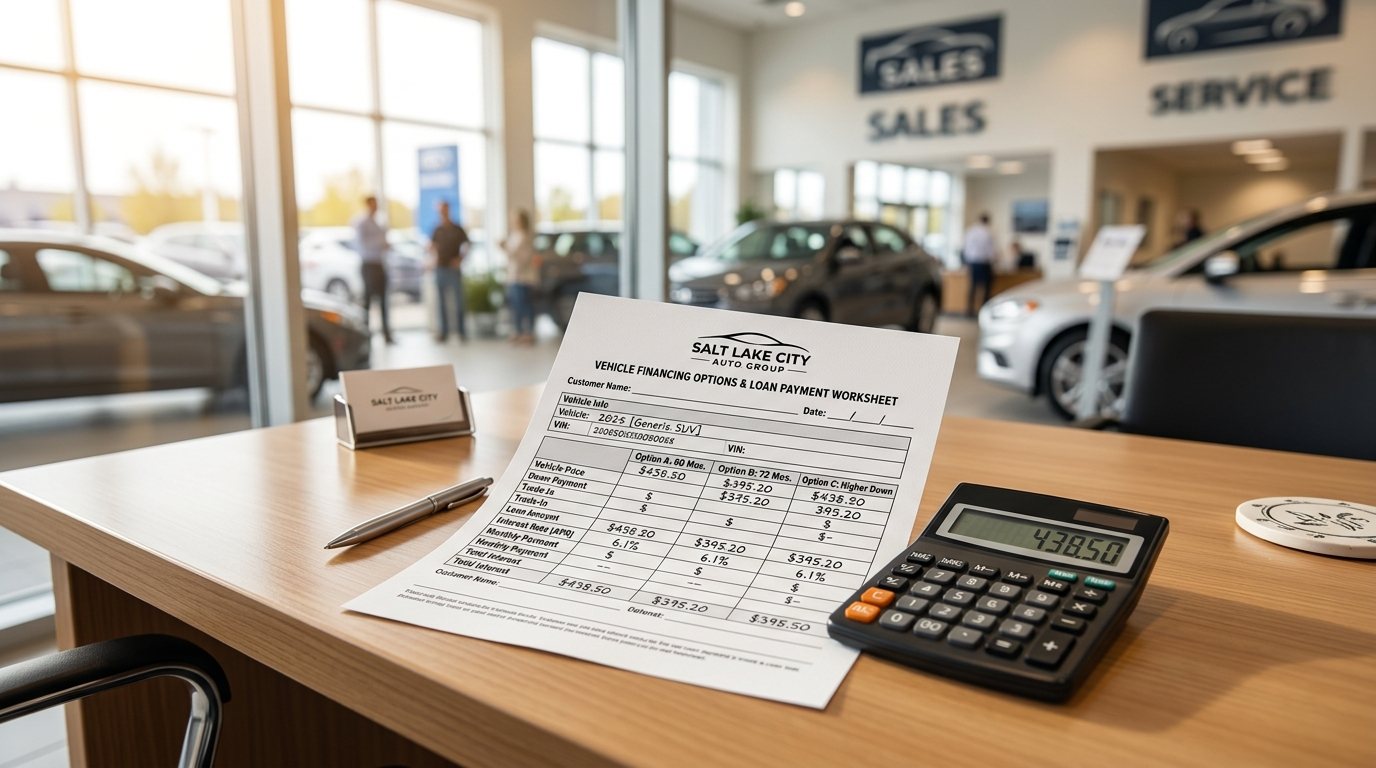
Compare total cost, not rate alone. A slightly higher rate on a shorter term can cost less overall than a lower rate stretched long.
Read the final contract's rate and term against what you agreed to. They should match exactly.
How DriveTrust handles this
We negotiate the out-the-door price first and keep it separate from the financing question, so a discount cannot quietly depend on which lender the client uses.
We also confirm in writing what manufacturer programs are actually available on the specific vehicle and whether a promotional rate and a cash incentive can be combined, which is a question that gets answered differently depending on who is asked and when.
The client still chooses their own financing. What changes is that they choose it with the real numbers visible, rather than at the end of a long day with one option in front of them.
Common questions
Is dealer financing worse than a credit union?
Not automatically. Dealers shop multiple lenders and can access subsidized manufacturer rates no outside lender can match. They can also mark up the rate they were approved at. Bring a pre-approval so you can tell which is happening.
What is the buy rate?
The rate the lender approves the dealership at. The sell rate is what you are quoted. The difference is dealer profit on your financing. Ask for the buy rate by name.
Should I get pre-approved before going to a dealership?
Yes, even if you end up using dealer financing. It gives you a benchmark and forces the dealer's offer to compete.
Can I use the manufacturer's low APR and the cash rebate together?
Often not. They are frequently either/or, and the cash portion is usually contingent on financing through the captive lender. Ask specifically and run the math both ways.
Does applying at multiple lenders hurt my credit?
Multiple auto loan inquiries within a short shopping window are generally treated as a single inquiry by scoring models. Rate shopping within a couple of weeks is normal and expected.
Can a dealer require me to use their financing to get a discount?
The FTC has flagged conditioning an advertised price on dealer financing as a potentially deceptive practice. If a discount disappears when you bring outside financing, ask for that condition in writing.
Can I refinance later if I take dealer financing?
Generally yes, through your own bank or credit union. It costs time and a credit inquiry, and it rarely makes sense if you took a subsidized promotional rate.
Rather not do this part yourself?
We settle the out-the-door price first and keep it separate from the financing question. Book a free consultation and we will walk through your situation.