How to Negotiate a Car Lease: Price, Money Factor, and Residual
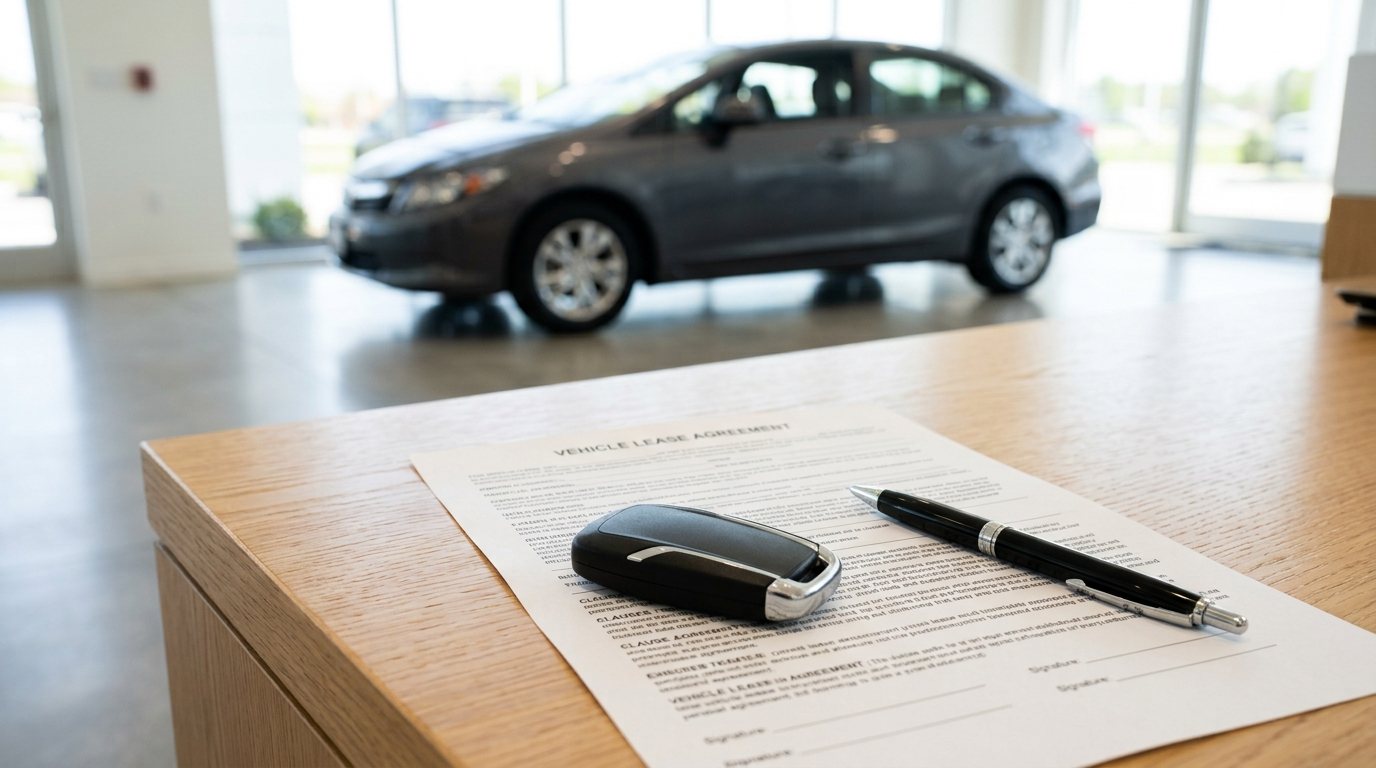
A lease payment can look simple: one number a month for three years. But that number is built from several pieces, and the dealer can make money on more than one of them. Most people negotiate the monthly payment and nothing else, which is exactly what makes leases so profitable for dealers.
The good news is that once you know the pieces, a lease is very negotiable. Here's how it works.
The pieces of a lease payment
Every lease payment comes from the same few numbers:
- Capitalized cost ("cap cost"). The price of the car in the lease. It works just like the selling price on a purchase.
- Residual value. What the car is expected to be worth at the end of the lease, set as a percentage of MSRP.
- Money factor. The interest rate on the lease, written as a small decimal like 0.0025.
- Term and mileage. How many months, and how many miles per year.
- Fees and money down. The acquisition fee, doc fee, taxes, and anything you pay up front.
Your monthly payment is mostly two things: the depreciation (cap cost minus residual, spread over the term) plus the interest charge from the money factor. Our Lease Calculator shows exactly how each piece adds up.
1. Negotiate the price first
The cap cost is the biggest lever you have, and it's negotiated exactly like a purchase price. Every dollar off the price lowers both the depreciation and the interest charge.
Don't tell the dealer you plan to lease until you've settled the price. Ask for an out-the-door price as if you were buying, compare dealers, then ask them to run the lease on that number.
Also ask about lease incentives. Manufacturers often offer "lease cash" that only applies to leases. It should come off the cap cost as its own line.
2. Ask for the money factor, and check it
The money factor is where dealers quietly add profit. The lender sets a base rate, called the buy rate, for buyers with good credit. Dealers are often allowed to mark it up and keep the difference.
To see the money factor as an interest rate, multiply it by 2,400. A money factor of 0.0025 is 6% APR. A money factor of 0.0030 is 7.2%. That small-looking change can add hundreds of dollars over a lease.
Ask the dealer directly: "What is the money factor, and is that the base rate from the lender?" Manufacturer finance companies publish their base rates to dealers each month, and many car forums list them by model. If the dealer's number is higher than the base rate and your credit is strong, ask them to lower it.
3. Know that the residual isn't negotiable
The residual is set by the lender, not the dealer, so there's nothing to negotiate there. But it still matters. A car with a high residual holds its value well, which means less depreciation to pay for and a lower payment. That's why two cars with the same price can have very different lease payments.
You can ask what residual the lender is using so you can check the math.
4. Watch the fees
Acquisition fee. A fee the leasing company charges to set up the lease. It's usually a set amount, but some dealers add to it. Ask what the lender's actual fee is.
Doc fee. The same paperwork fee as on a purchase. Check your state with our Doc Fee Calculator.
Disposition fee. Charged at the end of the lease when you turn the car in. It's often waived if you lease or buy another car from the same brand. Know the amount before you sign.
Add-ons. Lease deals get loaded with the same products as purchases: protection packages, tire and wheel coverage, prepaid maintenance. Decide on each one separately. See our guide to dealer-installed protection packages.
5. Be careful with money down
Dealers love to advertise a low payment with a big amount "due at signing." Putting a lot of money down on a lease lowers the payment, but it doesn't lower the total cost much, and there's a real risk.
If the car is stolen or totaled early in the lease, the insurance and GAP coverage pay off the lease, but the money you put down is usually gone. Many people prefer to put as little down as possible and pay a slightly higher monthly payment. Always compare leases by the total cost, not the monthly number.
6. Pick the right mileage
Leases come with a yearly mileage limit, often 10,000, 12,000, or 15,000 miles. Going over costs a set amount per mile at the end, commonly 15 to 25 cents. Buying extra miles up front is usually cheaper than paying for them at turn-in. Be honest with yourself about how much you drive.
Questions to ask before you sign
- What is the cap cost, and does it match the price we agreed on?
- What is the money factor, and is it the lender's base rate?
- What residual percentage is the lender using?
- Is all available lease cash applied?
- What are the acquisition fee and disposition fee?
- What is the total cost of the lease, including everything due at signing?
If any answer doesn't match what you were told, stop and ask before you sign. For help deciding whether to lease at all, see lease vs. finance.
Common questions
Can you negotiate a car lease?
Yes. The price (cap cost), the money factor markup, dealer add-ons, and some fees are all negotiable. The residual value is set by the lender and isn't.
How do I convert a money factor to an interest rate?
Multiply the money factor by 2,400. For example, 0.0025 times 2,400 equals 6% APR.
Is it better to put money down on a lease?
Usually not much. A big down payment lowers the monthly payment but not the total cost very much, and if the car is totaled early, that money is usually lost.
Can I negotiate the residual value?
No. The residual is set by the leasing company. What you can do is choose a car that holds its value well, since a higher residual means a lower payment.
What is a good money factor?
It depends on the brand, the month, and your credit. The best you can get is the lender's base rate for your credit tier. Ask the dealer for it and compare.
Rather not do this part yourself?
Saving you $1,000 or more is our goal on every deal. We negotiate the purchase, lease, trade-in, and add-ons start to finish. Book a free consultation and we will walk through your situation.