Dealer Add-Ons: Nitrogen, VIN Etching, and Paint Protection
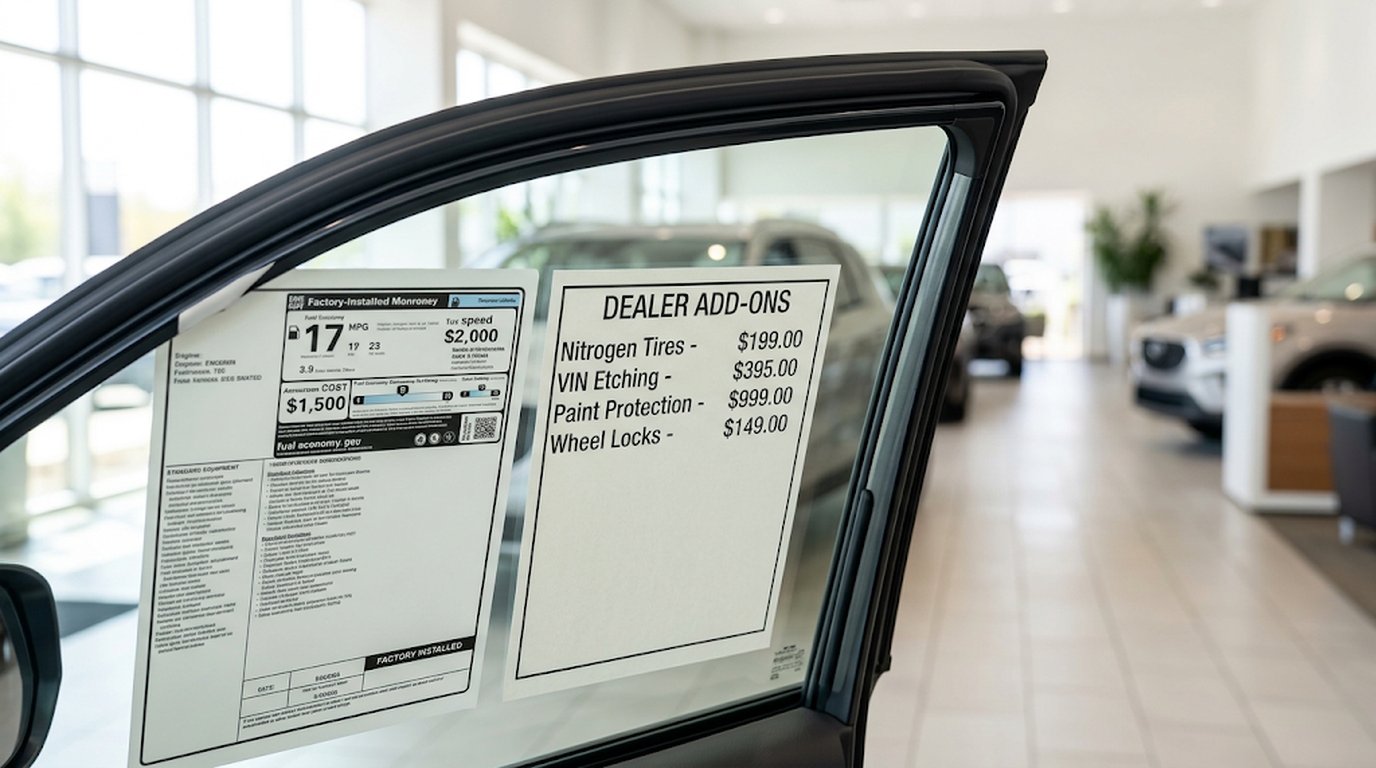
You agree on a price, then the paperwork shows a few extra lines: nitrogen-filled tires, VIN etching, paint protection, wheel locks. Each one sounds small or useful. Together they can add hundreds or even thousands of dollars to your deal.
These are dealer add-ons, and they're one of the most reliable profit sources a dealership has. Some have a little value. Most cost far more than they're worth. Here's a quick guide to the common ones.
Where add-ons show up
Add-ons usually appear in one of three ways:
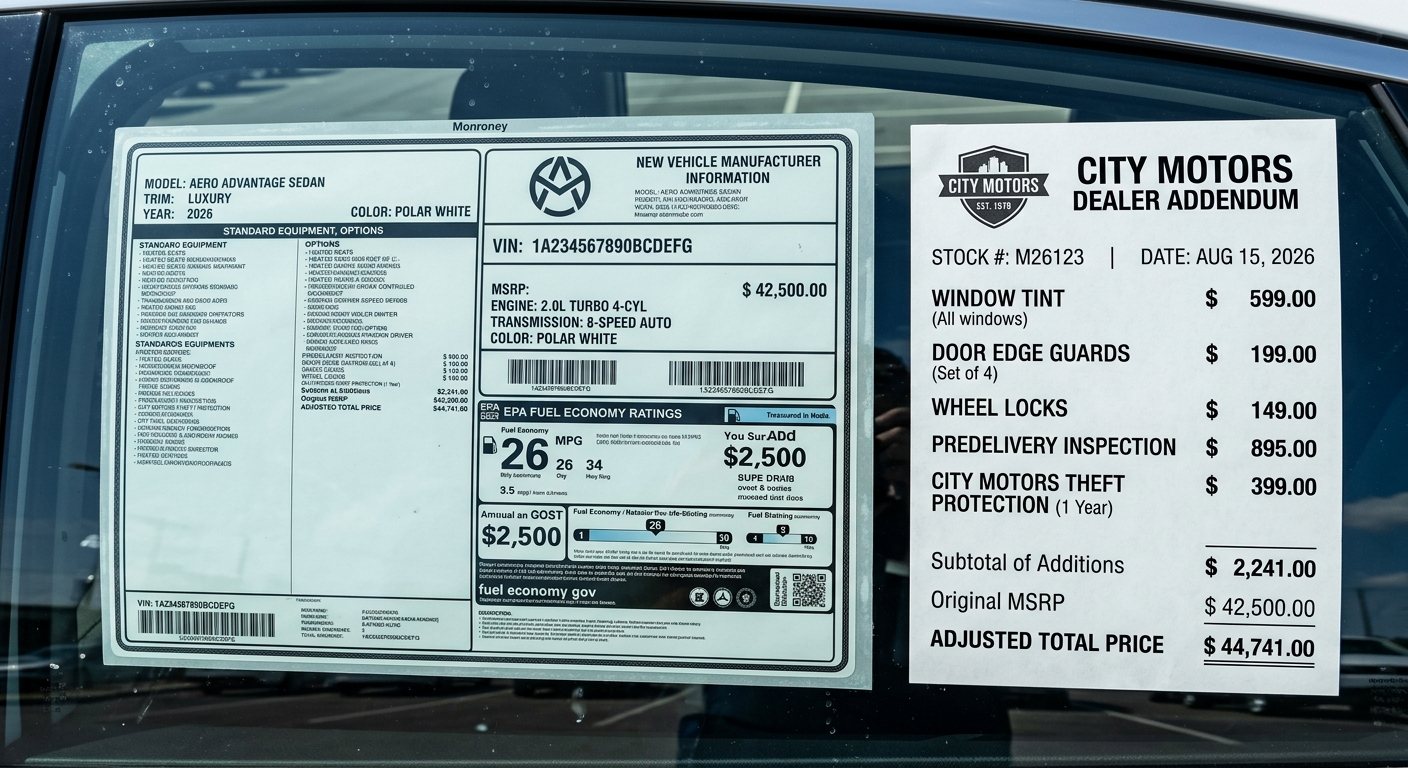
- On a second window sticker, often called an "addendum" or "dealer sticker," next to the factory sticker. The car comes with them already installed.
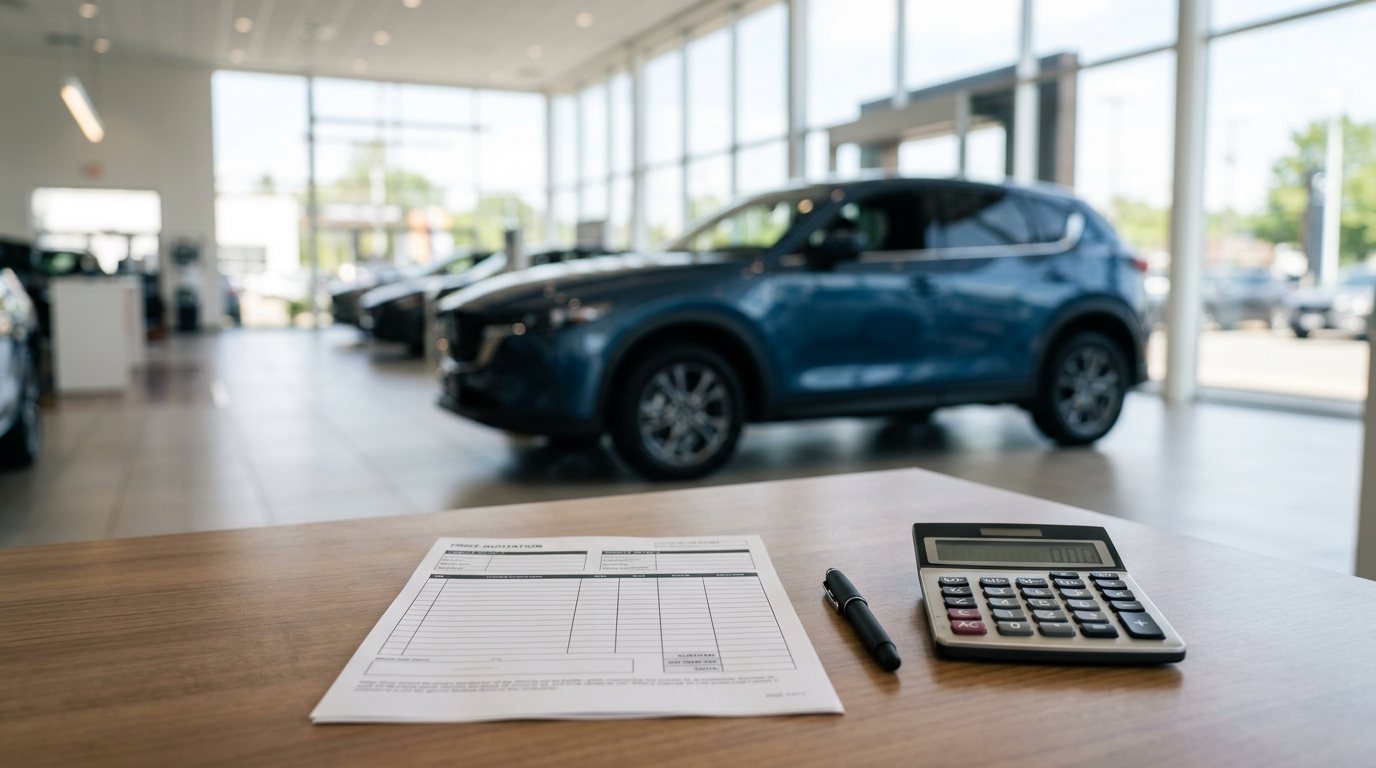
- As lines on your quote that weren't there when you agreed on the price.
- As a "package" with a name like "protection package" or "appearance package," bundling several items into one price. We cover bundles in our guide to dealer-installed protection packages.
The common add-ons, one by one
Nitrogen-filled tires. The dealer fills your tires with nitrogen instead of regular air. Nitrogen leaks out a little more slowly, but regular air is already about 78% nitrogen, and for everyday driving the difference is small. Many tire shops will top off with nitrogen for little or nothing. Not worth a big charge.
VIN etching. Your vehicle identification number is etched onto the windows, meant to discourage theft. Do-it-yourself kits cost very little, and some insurers or police departments offer etching for free. If a dealer charges hundreds for it, push back.
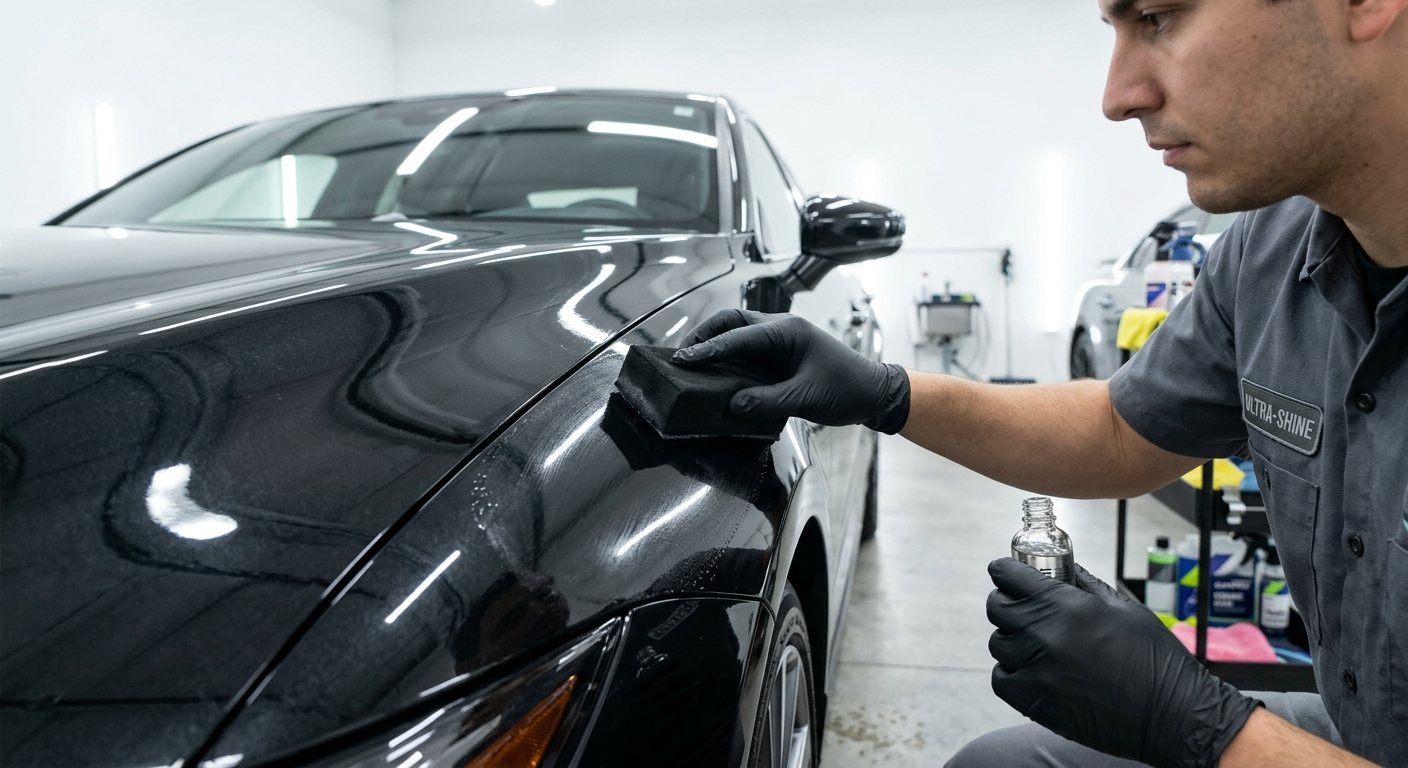
Paint and fabric protection. A coating or treatment applied to the paint and seats, sometimes with a limited warranty. Quality varies widely, and the warranty often has narrow terms. A good detail shop can apply a similar product, often for less. If you want it, compare prices first.
Ceramic coating. A higher-end paint coating that can genuinely help protect the finish. It can be worth it, but dealer prices are often well above what independent detailers charge for the same work.
Window tint. A real product with real value, especially in hot, sunny areas. Just compare the dealer's price with a local tint shop, and check your state's legal tint limits.
Wheel locks. Special lug nuts that need a key to remove, meant to prevent wheel theft. Useful on cars with expensive wheels, but they cost little at an auto parts store.
Door edge guards, mud flaps, and floor mats. Small accessories. They may be factory parts, but dealer pricing is often marked up. You can usually buy them from the manufacturer's parts site or online for less.
Theft deterrent or GPS tracking systems. Sometimes sold as a theft protection product with a promised payout if the car is stolen. Read the terms carefully, because the payout conditions are often limited, and your auto insurance may already cover theft.
Are add-ons negotiable?
Yes. Add-ons are priced by the dealer, not the manufacturer, and they're among the most negotiable lines in a deal.
If they haven't been installed yet, simply decline them. You aren't required to buy any add-on to buy the car.
If they're already on the car, you have options:
- Ask the dealer to remove the charge, since you didn't ask for the product.
- Ask them to lower the price of the car to make up for it.
- Ask another dealer for the same car without the add-ons.
The strongest position is a written out-the-door price from a dealer that doesn't load add-ons, which you can show to one that does.
Watch for "mandatory" add-ons
Some dealers say an add-on package is "mandatory" or "already on every car we sell." Sometimes that's a policy for their inventory. It isn't a law, and it's often a way to add profit on top of an advertised price.
If a dealer insists, treat the add-ons as part of the total price and compare that total with other dealers. In March 2026, the FTC sent warning letters to 97 dealership groups about advertising prices that leave out required charges. See our article on advertised price vs. real price.
How to keep add-ons off your deal
- Ask about add-ons before you visit. "Are there any dealer add-ons or packages on this car?" is a fair question by email or text.
- Ask for an itemized out-the-door price, so every add-on shows up as its own line.
- Decide in advance which ones, if any, you actually want, and what you'd pay for them elsewhere.
- Read the final paperwork before you sign. Add-ons sometimes reappear in the finance office.
Common questions
Do I have to pay for dealer add-ons?
No. Add-ons are optional products. If they're already installed, you can ask the dealer to remove the charge, lower the price, or shop another dealer.
Is nitrogen in tires worth it?
For most drivers, not at a dealer's price. Regular air is already mostly nitrogen, and the benefit for everyday driving is small.
Is VIN etching a scam?
It isn't useless, but it's usually overpriced at a dealer. Kits are inexpensive, and some insurers or police departments offer it free.
Can a dealer force you to buy add-ons?
A dealer can choose to sell only cars with add-ons installed, but you don't have to buy from that dealer. Compare the total out-the-door price with dealers that don't add them.
Is dealer paint protection worth it?
It depends on the product and the price. Compare with a local detail shop, and read the warranty terms carefully before you pay for it.
Rather not do this part yourself?
Saving you $1,000 or more is our goal on every deal. We negotiate the purchase, lease, trade-in, and add-ons start to finish. Book a free consultation and we will walk through your situation.